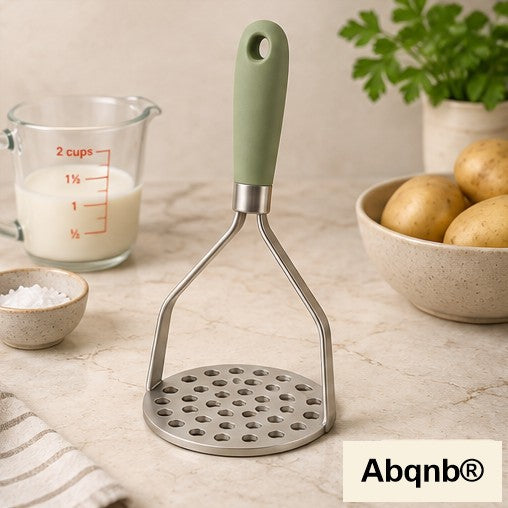
Abqnb® Fieldplate Potato Masher
Abqnb® Fieldplate Potato Masher
🎁Daily: The first 200 customers to place an order will receive double the product as a gift!
BUNDLE & SAVE
Couldn't load pickup availability

Abqnb® Fieldplate Potato Masher
Design theme: Hand Mashing
A flat perforated stainless steel plate forms the working end of the Fieldplate masher. As the plate moves downward, soft pieces break apart and some pass through the holes. The handle sits above the plate so you can press into a deep bowl with short strokes.
In the kitchen
Start with well cooked, drained potatoes. Work across the bowl in overlapping passes and stop when the pieces reach the texture you want. Fold in warm milk or butter after the first few passes if your recipe calls for it.
A simple plate masher lets you stop at the texture you like. For a coarse mash, use fewer passes and leave some small pieces intact. For a more even mash, use overlapping presses and check the edges and bottom of the bowl, where whole chunks can hide. Drain the cooked vegetables thoroughly if your recipe calls for a firmer result. Add liquids in stages and fold them in once the pieces have broken down. The texture will depend on the ingredients, cooking time, and how far you work them.
The same plate works with tender cooked beans, steamed sweet potato, or ripe avocado. For a rustic bean spread, mash only part of the batch and stir the rest back in to keep some whole beans for texture.
The plate also makes quick work of ripe fruit for a small batch of filling or a topping. Use a bowl with tall enough sides to contain the mixture. Press down with steady force rather than striking the bottom, and avoid pushing against the bowl wall. For a softer avocado spread, mash the flesh before folding in diced onion or tomato so those pieces keep their shape. For especially fibrous ingredients, check that they are tender enough to crush before pressing.
If you like a mashed vegetable side with two textures, set aside some cooked pieces before you start pressing. Mash the main batch, then fold those pieces in gently at the end. This is also a convenient way to blend a little sweet potato into a bowl of regular potatoes without making every bite the same. A short rinse also helps loosen cooked starch.
Care and handling
Use a sturdy bowl or an uncoated pot on a stable surface. Keep the plate flat during each press and lift it before moving to the next area. Break larger pieces into smaller chunks if they slide out from under the plate.
Rinse away starch promptly and use a soft brush to clear the holes. Wash where the metal support joins the plate and handle, rinse well, and dry before storage.
Choose your option
Choose Sage Green or Charcoal for the handle. Each purchase includes one masher with the same perforated steel plate. The upright grip suits a pressing motion with the bowl directly in front of you. If you often prepare potatoes, sweet vegetables, or beans for small batches, it is a straightforward tool to keep within reach. Allow room for the plate when storing it, and check both faces after washing to make sure the holes are clear.
Gallery shows the Sage Green design concept.